

LED Headlamps: The Complete Guide

A headlamp solves a problem a flashlight can't, it keeps both your hands free while the light goes exactly where you look. People use LED headlamps for many reasons, and we cover them here.
This guide will hit everything you need to know about LED headlamps, what to look for in a headlamp, how rechargeable and battery-powered options compare, the situations where a headlamp is the right call, and the unique features that separate one headlamp from another.
Why Choose an LED Headlamp Over a Handheld Flashlight
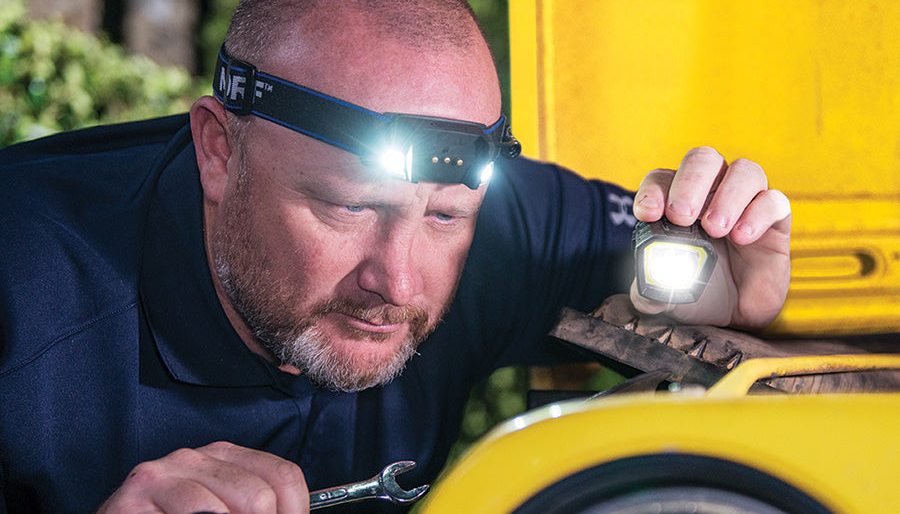
The case for a headlamp comes down to one simple fact: some tasks need both hands, and a flashlight only frees up one. The moment you're holding a wrench, a tent pole, a leash, or a fishing rod, a handheld flashlight becomes something you're balancing awkwardly. Not ideal.
A headlamp also puts light exactly where you're looking, which sounds minor until you're working in a dark engine bay or reading a trail map. Turn your head, and the light follows, making tasks like checking a map, tying a knot, or even reading small text way easier.
None of this makes a headlamp better than a flashlight across the board. A flashlight still throws a more concentrated beam over long distances and can be handed to someone else or aimed independently of where you're looking, which matters for signaling or lighting a wide area for a group. Most people who use either regularly end up owning both and reaching for whichever fits the task, a headlamp for anything hands-on, a flashlight for anything that needs a directed beam.
Key Features to Look For in an LED Headlamp
Just like with any flashlight, you'll want to keep a few features in mind with LED headlamps. Actually, it's mostly the same features you would look for in a flashlight, but there are a few major differences.
How bright is the headlamp?
Lumens is the number most people look at first, and for good reason since it's the easiest way to compare output across models. But it's important to remember that a headlamp is usually for more up-close work so it would be better to use a moderate number of lumens for most tasks. A headlamp bright enough to light a campsite can be too intense for reading in a tent a foot from your face. Look for a range of modes rather than just a high number, so you can dial output up or down depending on the task.
What's the beam distance and beam angle?
Beam distance tells you how far a headlamp throws light in a tight, focused beam, useful for scanning a trail or spotting something at range. Beam angle, or flood, tells you how wide the light spreads close up, better for reading, cooking, or working on something right in front of you. Some headlamps let you adjust between the two with a twist or slide focus, which is worth prioritizing if you use your headlamp for more than one kind of task.
Is it lightweight?
A headlamp you're wearing for an hour or more needs to be light enough that you forget it's there. Heavier headlamps, usually the ones with bigger batteries and higher max output, can start to feel like a strain on a longer hike or shift, so weigh brightness against how long you'll be wearing it.
Will it be comfortable to wear?
An adjustable elastic strap is the standard, and it should sit securely without pinching or sliding down, whether you're wearing it alone or over a hat. A wider strap or one with a rear stabilizer tends to distribute weight more evenly for extended wear.
Is it water-resistant?
Most headlamps see at least some exposure to rain, sweat, or splashes, so a water-resistant or IPX-rated build is a good feature to look out for. Check the specific rating if you'll be using yours somewhere wet, like fishing or a rainy job site, rather than assuming "water resistant" covers every scenario.
Battery-Powered vs. Rechargeable Headlamps
This is the question we hear most, and the honest answer is: it depends on how you'll actually use it.
Rechargeable headlamps make sense if you're reaching for yours often, nightly dog walks, a job site five days a week, or regular camping trips. They charge over USB, usually the same USB-C cable you already use for your phone, so there's no ongoing cost of buying batteries.
Our Blackout-R 1000 Lumen Rechargeable Headlamp is a good example of what rechargeable can deliver: 1,000 lumens on high, slide focus optics, and a pivoting head, all from a built-in battery that charges in about three hours. The tradeoff is that a rechargeable headlamp left untouched for months can lose its charge, so it needs the occasional top-off to be ready when you need it.

Battery-powered headlamps are the better call if this is a true "grab it and go" light that might sit in a bag or glovebox for months without being touched. Alkaline batteries hold their charge in storage far longer than a rechargeable cell sitting idle, so you're more likely to have a working light the moment you need one.
Our Ryder 350 Headlamp runs on 3 AAA batteries, puts out 350 lumens on high, and includes a red night vision mode built for hunting and other low-light activities. The tradeoff is the ongoing cost and occasional hassle of buying and swapping batteries.
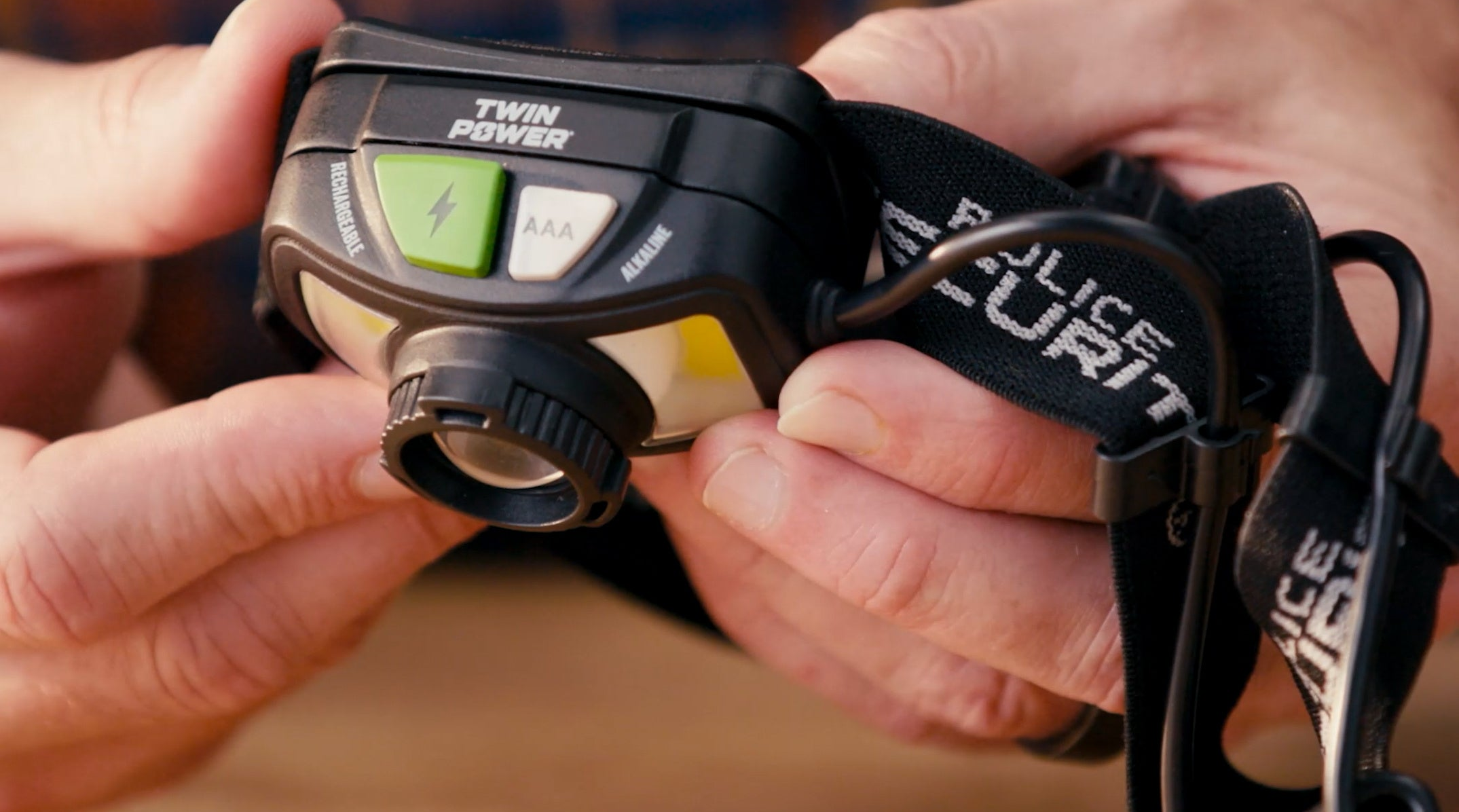
There are also dual-power LED headlamps, a middle path worth knowing about. Our Twin Power line, including the Twin Power 550 and Twin Power 800, lets you switch between a built-in rechargeable battery and AAA alkaline backup without removing anything, so you get the convenience of rechargeable with a safety net if you're ever caught without a charge.
For more on the bigger rechargeable-vs-battery decision across our full flashlight lineup, not just headlamps, see our Rechargeable Flashlights buying guide.
When to Use a Headlamp
You can use an LED headlamp whenever you want to, but there are a few times where it makes more sense to use it than say a flashlight or lantern. So here are a few use-cases for headlamps:

Camping and backpacking
Choosing a headlamp over a handheld flashlight is more down to personal preference. Many people prefer LED headlamps for outdoor adventures. If you're planning on doing a lot of hands-on activity when it's getting dark, a headlamp is a great option. Did it take you a while to hike to your camp and now you're setting up the tent in the dark? Good thing you have a headlamp.
Biking, running, walking, and dog walking after dark
A lightweight headlamp keeps both hands free for a leash or your stride, and a lower lumen mode is usually enough to see the path and be seen by others. With a bike, this is especially useful if you like biking in the early mornings or late evenings.
Hunting and fishing
Early mornings and late evenings call for hands-free light while you're managing gear, a rod, or a rifle, and a night vision mode helps preserve your natural night vision while you work. We'll talk more about that in a bit.
Home and auto repair
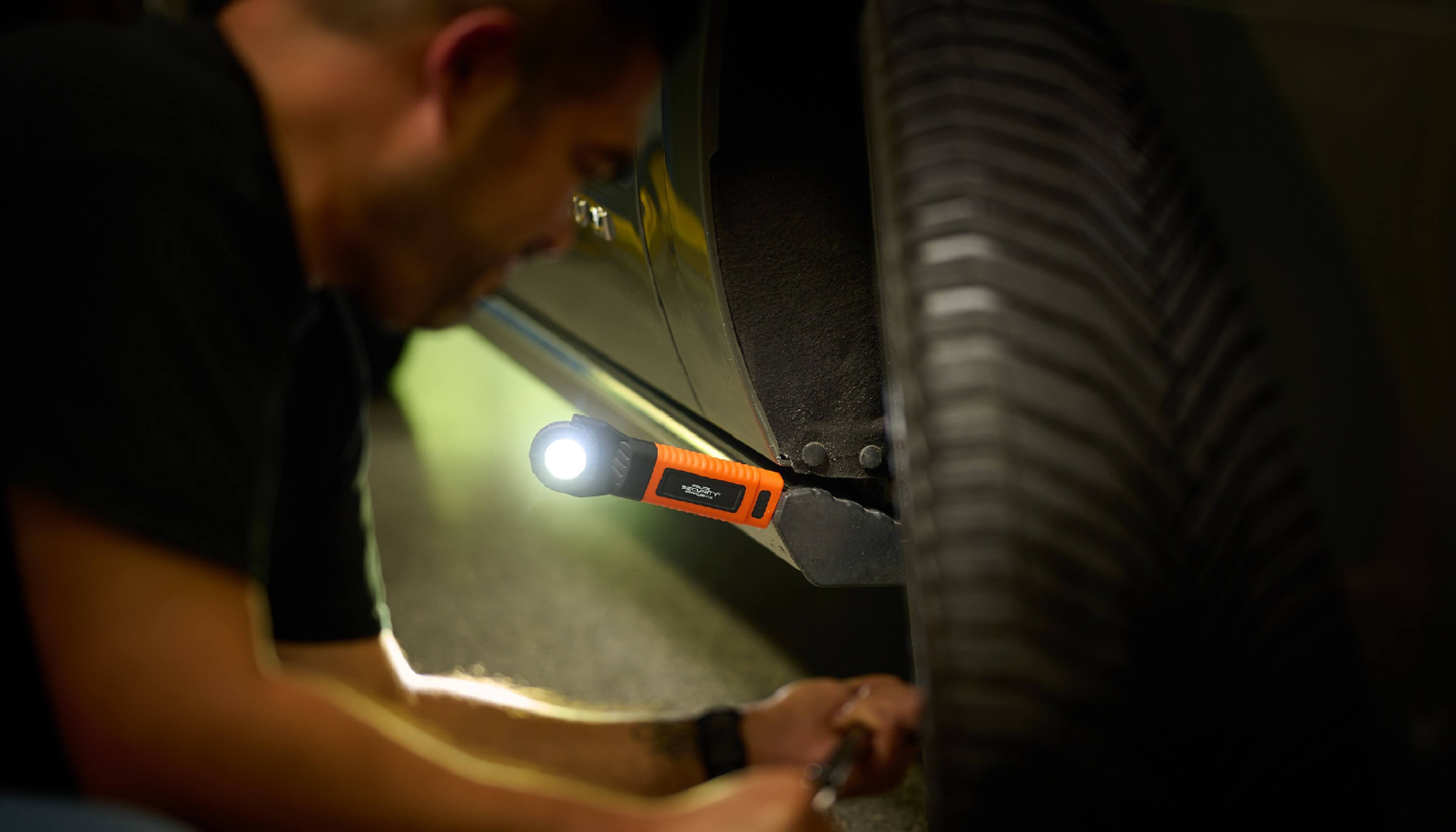
If you're working on the car or on the house, your hands are almost always busy. Unless you have a third hand, it doesn't make sense to hold a flashlight. A headlamp gives you the ability to work in these small dark spaces like underneath a car, while keeping your hands free.
Job sites and trade work
Electricians, HVAC techs, and anyone working in crawl spaces or attics need hands-free light that holds up to a full shift. If this is your primary use case, our upcoming Work Lights guide covers job-site lighting in more depth, from headlamps to larger fixed work lights.
Unique Headlamp Features
Beyond the basics, a few features show up across our lineup that are worth knowing about before you buy. For many headlamp users, some of these features are nonnegotiables.
Pivoting or tilting heads: Most of our headlamps let you angle the head down, usually somewhere between 45 and 80 degrees, so you can aim the beam at what's in front of you without tilting your whole head down.
Red night vision mode: A handful of our headlamps, including the Ryder 350 and our Colt-R, include a red light setting, useful for reading a map, checking gear, or moving around camp at night without ruining your eyes' adjustment to the dark the way a full-brightness white beam does.
MORF removable design: Our MORF R700 is a 3-in-1 light with a unique feature that you won’t see anywhere else. You can wear it as a headlamp, detach the front to use it as a standalone flashlight, or use the headlamp base on its own as a hands-free light source. It's a very versatile option if you want one light that adapts to more than one job.

COB flood technology: Chip-on-board, or COB, lighting spreads a wide, even flood beam that's especially useful for close-up tasks. Our Colt-R and Connector Headlamp both pair COB flood lighting with a standard LED beam, giving you both a wide flood and a longer-range beam in one light.
Dual power switching: We covered this above, but it's worth repeating here. Our Twin Power headlamps let you toggle between rechargeable and alkaline power with a button, no need to remove the rechargeable battery to load AAAs. Dual power is a great option for camping, professional work, or even just DIY work.
FAQ
What is an LED headlamp?
An LED headlamp is a hands-free light worn on an adjustable headband, using LED bulbs for illumination. Unlike a flashlight, it points wherever you're looking, which frees up both hands for whatever task you're doing.
How many lumens do I need for a headlamp?
It depends on what you're using it for. For everyday tasks and reading, 100 to 300 lumens is usually plenty. For trail running or hiking at night, something closer to 300 to 500 lumens gives you enough range to see the path ahead. For hunting, work sites, or lighting a wide area, 500 lumens or more gives you real margin.
Rechargeable or battery-powered, which is better for a headlamp?
Both work well, and it comes down to how often you'll use it. Rechargeable is more convenient for regular use since you're not buying batteries, while battery-powered is the more reliable choice for a headlamp that might sit unused for months, since alkaline batteries hold their charge in storage longer. Our Twin Power headlamps offer both in one light if you don't want to choose.
What's the benefit of a red light mode on a headlamp?
Red light preserves your night vision better than a full-brightness white beam, since white light causes your eyes to readjust to the dark each time you use it. It's especially useful for hunters, campers checking a map at night, or anyone who wants to move around in the dark without losing their night vision.
Can I wear a headlamp with a hard hat?
Generally, yes. Our headlamps use adjustable elastic straps designed to fit comfortably whether you're wearing them alone or over a hard hat, making them a practical option for job site use. Fit can vary slightly by hard hat style, so it's worth trying yours on before relying on it for a full shift.
Where can I buy LED headlamps online?
Right here. You can shop our full lineup of LED headlamps online at policesecurity.com, and you'll also find Police Security headlamps on the shelf at hardware and retail stores nationwide.