

LED Flashlights: History, Technology, and Guide

Nearly every flashlight sold today, ours included, is built around LED technology, but most people have never actually stopped to ask what that means or why it matters. This guide covers how LED flashlights work, why LED has almost entirely replaced older bulb types, a quick look at how we got here, the specs worth understanding before you compare one flashlight to another, and the different types of LED flashlights out there depending on exactly what you need one for.
How LED Flashlights Work
LED stands for light-emitting diode, a small semiconductor component that produces light when electricity passes through it. That's quite a different process than older flashlight bulbs, which produced light by heating a thin metal filament until it glowed, the same basic idea behind a household incandescent bulb. An LED doesn't rely on heat to produce light, electrons moving through the semiconductor material release energy directly as photons, which is why LEDs run cooler and use power far more efficiently than a heated filament ever could.
Inside an LED flashlight, one or more small LED chips sit behind a reflector or lens that shapes the raw light into a usable beam. The reflector concentrates the light into a more focused beam for distance, while the lens can spread or narrow that beam depending on the design, some flashlights let you adjust this yourself with a twist or slide focus. A driver circuit regulates how much power reaches the LED, which is what makes multiple brightness modes possible on a single flashlight, high, low, strobe, and everything in between, all from the same bulb.
This is also where lumens come in, the number you'll see on the packaging of nearly every flashlight sold today. A lumen is a unit that measures the total amount of visible light a source puts out in every direction. It's not the same as brightness at a distance, that's a separate measurement called beam distance or candela, but lumens is the standard way to compare the raw output of one flashlight against another. A flashlight rated at 500 lumens is putting out roughly five times the total light of one rated at 100 lumens, all else being equal.
Why LED Has Replaced Incandescent
LED wasn't always the standard. Older flashlights ran on incandescent bulbs, and some used krypton or xenon gas-filled bulbs that burned slightly brighter than a standard incandescent, but all of them shared the same basic weaknesses. LED solved those weaknesses well enough that incandescent flashlights have almost entirely disappeared from store shelves.
Efficiency
An incandescent bulb wastes most of its energy as heat rather than light, only a small fraction of the electricity it draws actually becomes visible light. An LED flips that ratio, converting far more of its energy directly into light rather than heat. In practical terms, that means an LED flashlight gets significantly more runtime out of the same battery than an incandescent flashlight ever could.
Lifespan
A typical incandescent bulb is rated for somewhere around 1,000 hours of use before the filament burns out, similar to a household bulb. An LED is rated for tens of thousands of hours, often 50,000 or more, which for most people means the bulb will essentially never wear out over the life of the flashlight. There's no filament to snap, no bulb to replace, the LED simply outlasts everything else in the flashlight.
Durability
Incandescent bulbs rely on a fragile glass envelope and a thin wire filament, both of which are genuinely vulnerable to impact. Drop an old flashlight hard enough and there's a real chance you've just broken the bulb. An LED is a solid-state component with no glass envelope or filament to shatter, which is a big part of why modern flashlights can survive drops, vibration, and rough handling that would have ended an incandescent flashlight's life on the spot.
Put together, those three advantages are the whole story. LED flashlights run longer on a charge or set of batteries, keep working for years without needing a new bulb, and hold up to the kind of everyday abuse a flashlight actually experiences. Once LED technology became affordable enough to compete on price, there wasn't much reason left to buy anything else.
The History of LED Flashlights
The flashlight itself predates the LED by more than half a century. The first battery-powered flashlights showed up around 1899, running on early dry-cell batteries and small incandescent bulbs, dim, short-lived, and prone to burning out, but revolutionary compared to carrying an open flame. Incandescent and later krypton and xenon bulbs remained the standard for the better part of a century.
The LED itself dates back further than most people expect, too. The first practical LED was developed in 1962, but early LEDs could only produce a dim red light, useful as an indicator light on electronics but nowhere near bright enough for illumination. For decades, LEDs stayed in that role, the small "power on" light on a device rather than a light source you could see by.
The breakthrough that made LED flashlights possible came in the early 1990s with the invention of the blue LED, which made white LED light achievable for the first time by combining blue LED light with a phosphor coating. That invention was significant enough to earn a Nobel Prize in Physics in 2014, and it's the reason every white LED flashlight on the market today exists at all.
From there, progress moved quickly. LED output improved substantially through the late 1990s and 2000s, manufacturing costs dropped, and by the mid-2000s LED flashlights started appearing on store shelves as an alternative to incandescent, with mainstream adoption picking up quickly through the 2010s as prices came down further.
The rise of rechargeable lithium-ion batteries around the same period paired naturally with LED's efficiency, giving flashlight makers the ability to build smaller, brighter, longer-lasting lights than incandescent technology ever allowed.

Key Specs to Understand
Once you're comparing LED flashlights against each other, there are a handful of specs that you’ll want to look at.
Lumens - As covered above, lumens measure total light output. It's the most common spec used to compare flashlights, but it's not the whole picture. A flashlight can have high lumens and still throw a short, wide beam rather than a long, focused one. It's also worth knowing that lumen ratings aren't independently policed, so it pays to buy from a brand that tests and stands behind its numbers.
Beam distance - This measures how far a flashlight's beam remains usable before it fades into darkness, typically tested to the point where the beam matches the brightness of a full moon. Beam distance depends on how tightly a flashlight focuses its light, not just how many lumens it produces, which is why two flashlights with similar lumens can have very different beam distances.
Runtime - Runtime is how long a flashlight stays usable on a single charge or set of batteries, and it always trades off against brightness. Expect the shortest runtime on a flashlight's highest setting and considerably longer runtime on low, so check runtime at the specific mode you plan to use most rather than just the headline number.
IP rating - An IP, or ingress protection, rating tells you how well a flashlight resists dust and water, shown as two digits, like IPX4 or IP67. The first digit covers dust resistance, an X means it wasn't tested for dust. The second digit covers water resistance, on a scale that runs from light splashes at the low end to full submersion at the high end. A higher second digit means more water protection. They range from being able to withstand splashes all the way to being able to withstand complete submersion.
LED Flashlight Types
LED flashlights range wildly, with so many different options that it can be overwhelming when shopping for one. So let’s get into the different flashlight types to help narrow things down.
Rechargeable Flashlights
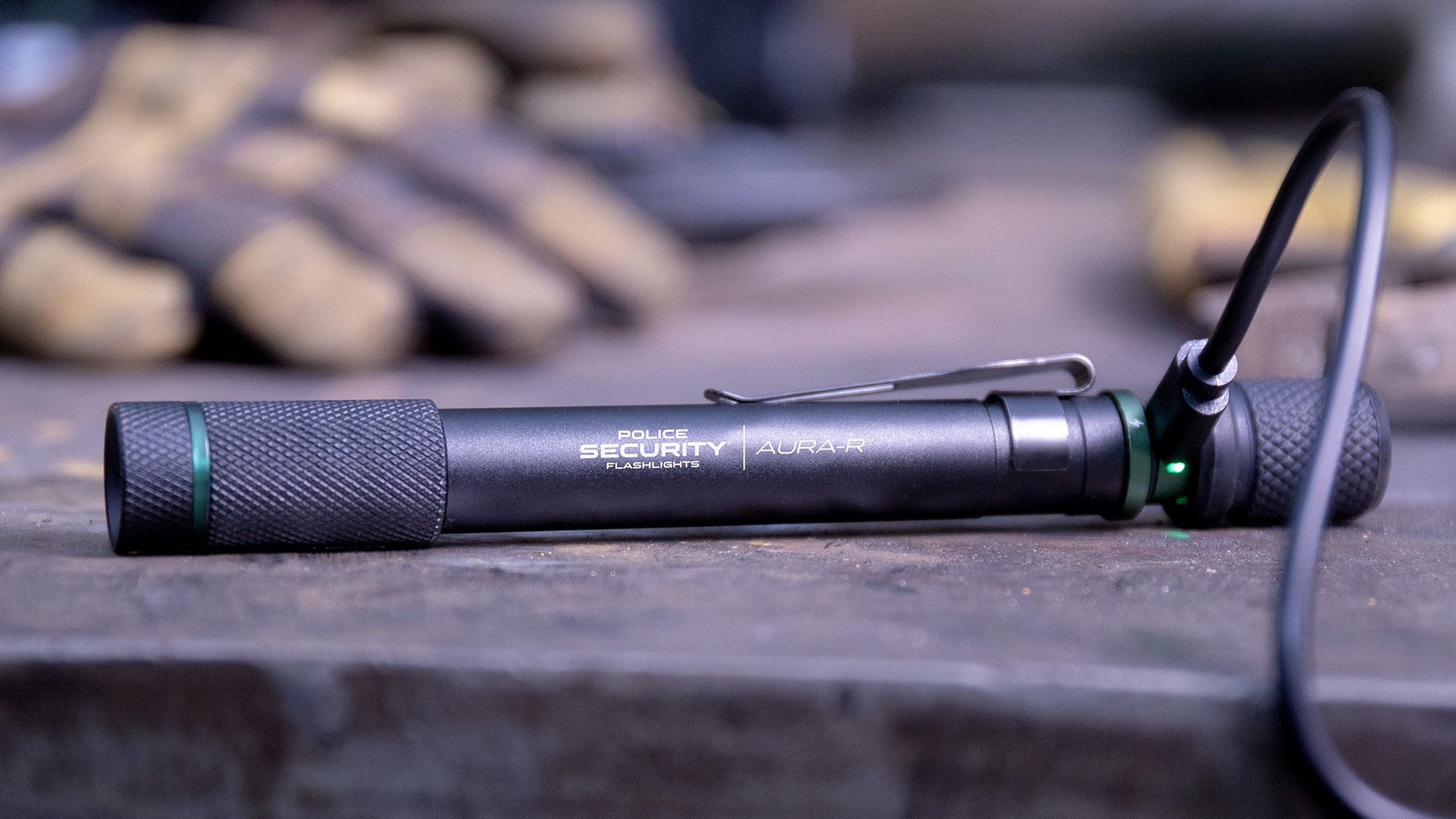
Many modern LED flashlights, including ours, run on a rechargeable battery you top off over USB rather than disposable batteries. It's become a very common choice in LED flashlights since there are no extra batteries you need to have on hand and no ongoing cost for replacement. For the full breakdown of what to look for and how rechargeable compares to battery-powered, see our Rechargeable Flashlights: The Complete Guide.

EDC Flashlights
EDC stands for everyday carry, a compact LED flashlight small and reliable enough to carry with you daily, clipped in a pocket, on your keys, or in a bag. The tradeoffs here are size and weight first, maximum output second. For more on what makes a good EDC flashlight and our picks by category, check out our everyday carry flashlights.
Tactical Flashlights
Tactical flashlights are built around durability, high output, and purpose-specific features like strobe modes, built for professional or emergency use where reliability under stress matters most. Read more in our guide to tactical flashlights.
Headlamps
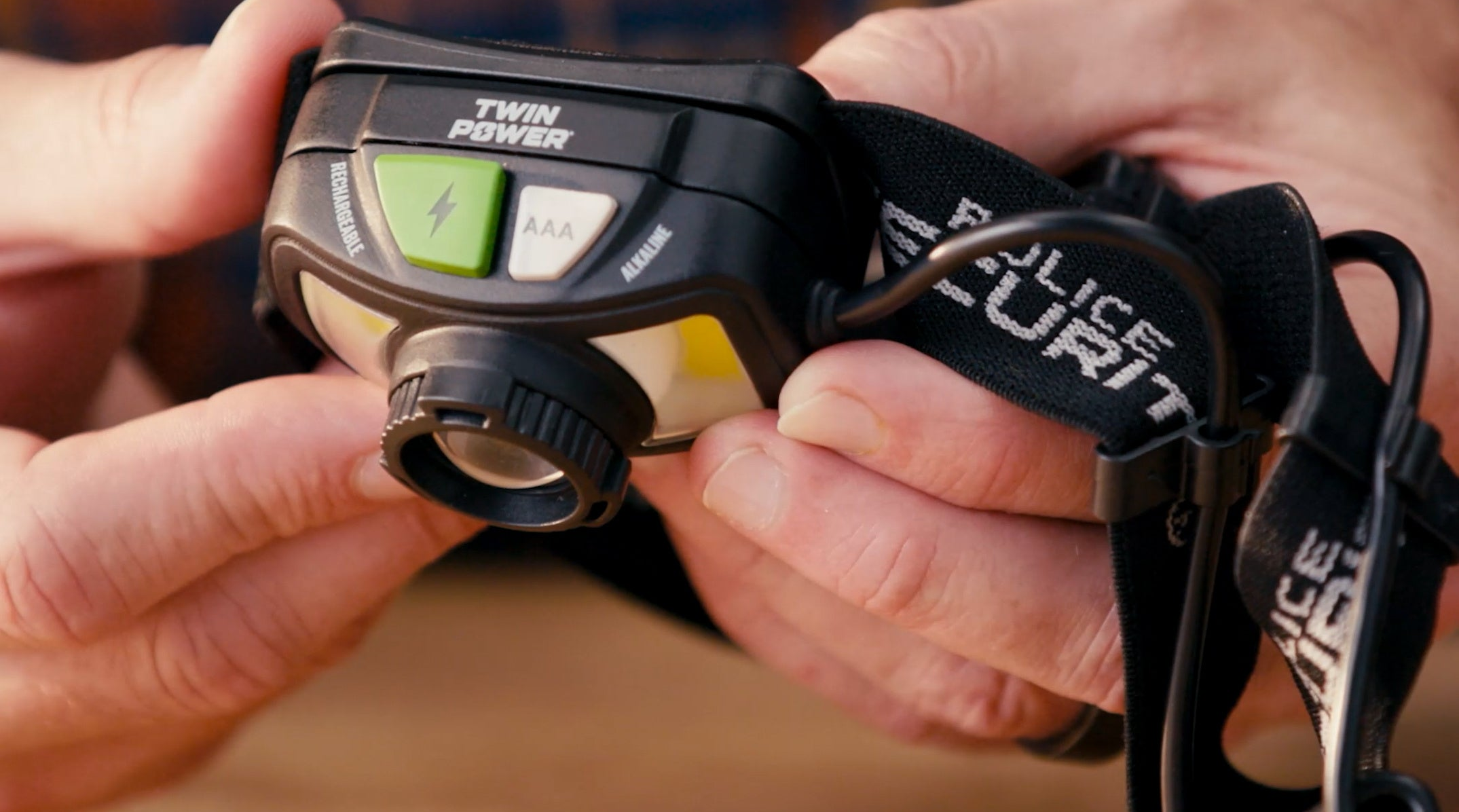
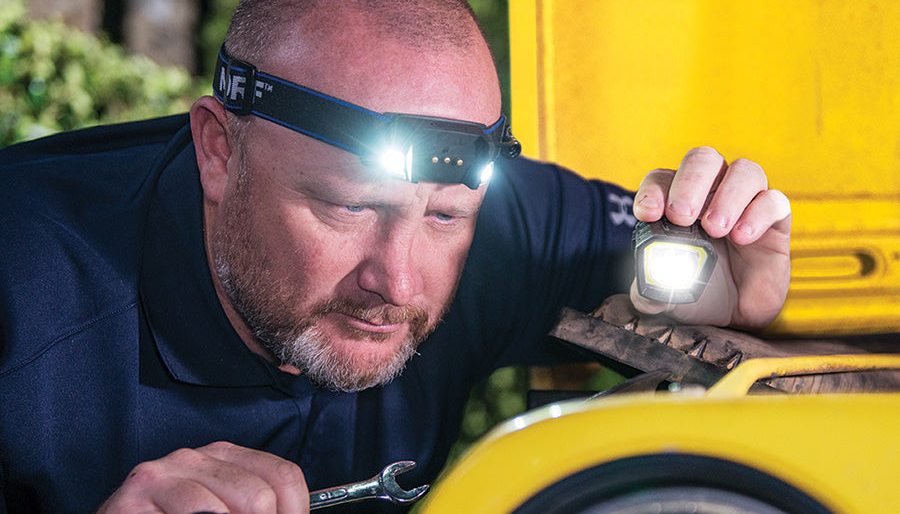
A headlamp is an LED light worn on an adjustable headband rather than held in your hand, which frees up both hands for anything from setting up a tent to working under the hood of a car. See our LED Headlamps: The Complete Guide for what to look for and how headlamps compare to handheld flashlights.
Camping Lanterns and Flashlights
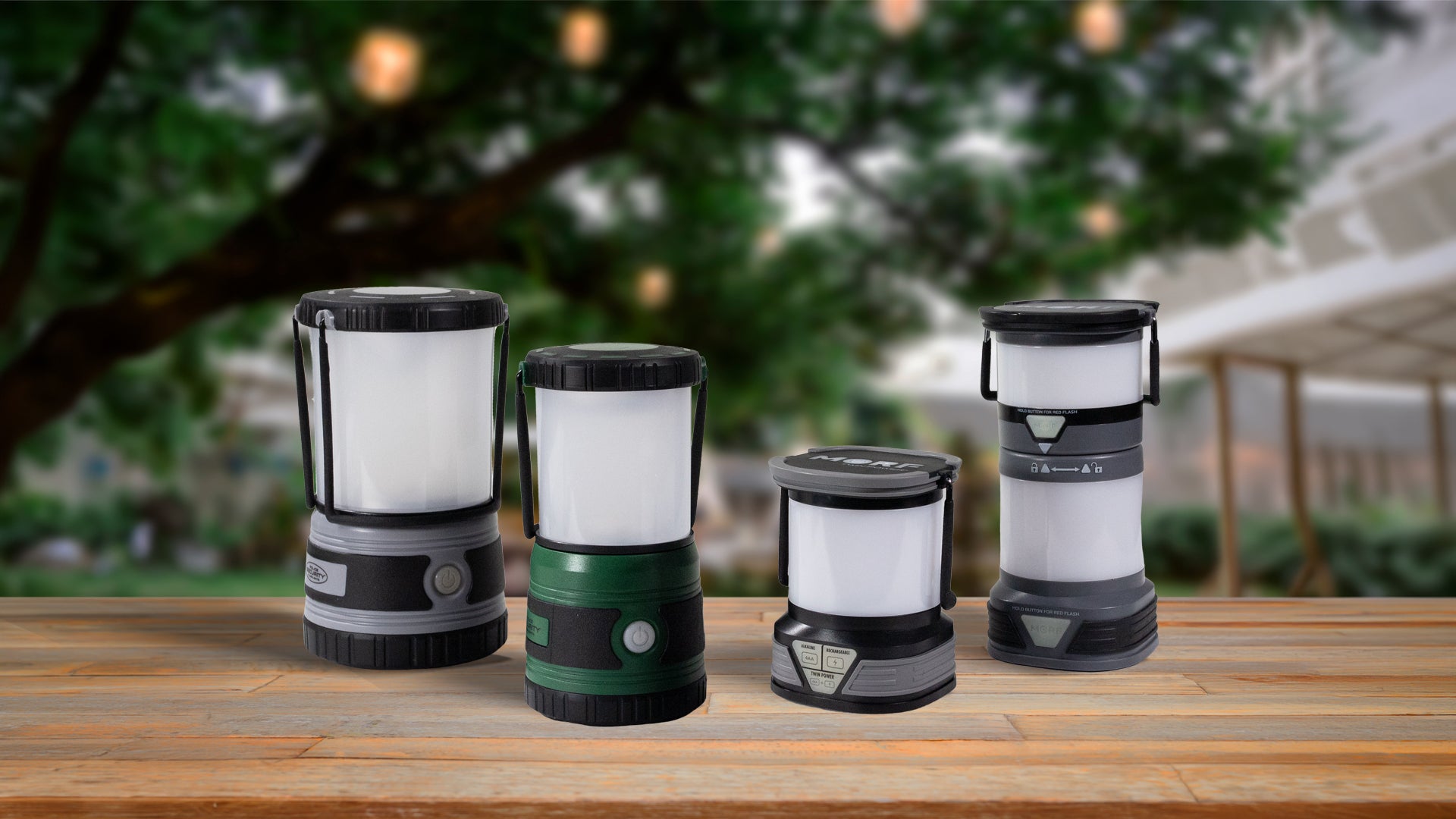
Camping calls for a slightly different set of priorities than everyday carry or tactical use, wide-area lighting, longer runtime, and often a hands-free or hang-anywhere design. Our Camping Lanterns & Flashlights: The Complete Guide covers the full breakdown of lanterns versus flashlights for outdoor use.
Worklights
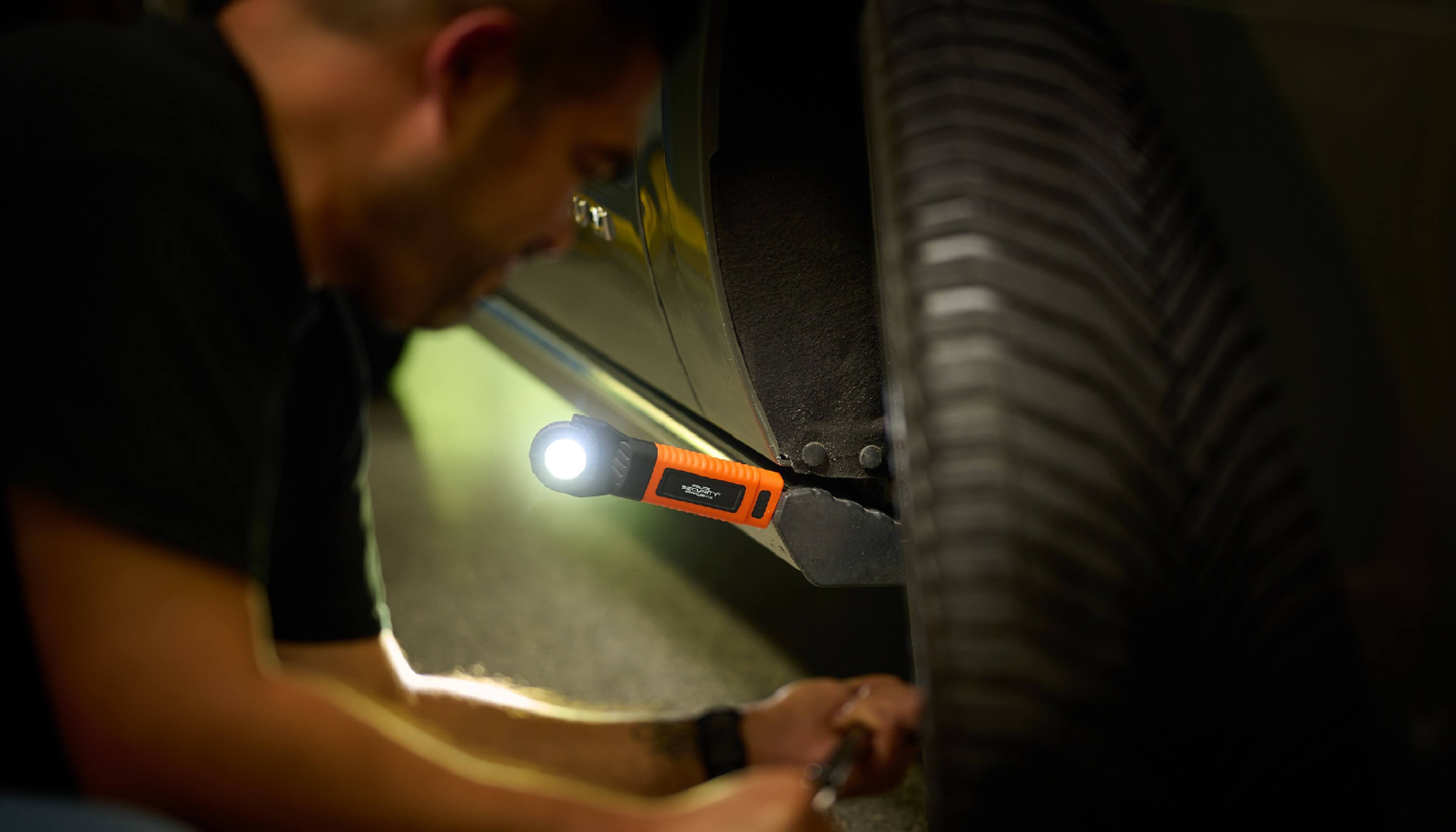
Job sites and trade work call for LED lighting that’s a little more specialized with certain features like magnetic bases or flexible light angles. Worklights also built to handle a full shift and hold up to drops, dust, and rough handling.

FAQ
What is an LED flashlight?
An LED flashlight is a flashlight that uses a light-emitting diode as its light source instead of an older incandescent, krypton, or xenon bulb. It's the standard type of flashlight sold today, more efficient, longer-lasting, and more durable than the bulb technology it replaced.
How do LED flashlights work?
An LED flashlight produces light using a semiconductor component called a light-emitting diode, which generates light directly from electricity rather than by heating a filament the way older incandescent bulbs did. That's why LEDs run cooler, last far longer, and use power more efficiently than the bulbs they replaced.
Are LED flashlights actually better than incandescent ones?
Yes, on nearly every practical measure. LED flashlights run more efficiently, last tens of thousands of hours longer, and hold up better to drops and rough handling than incandescent flashlights ever did, which is why incandescent has almost entirely disappeared from the market. See the full breakdown above for what changed and why.
Why do LED flashlights get hot, and can they start a fire?
LEDs run far cooler than incandescent bulbs, but they're not heat-free, especially at high lumen output, where the driver circuit and battery can generate real warmth during extended use. Under normal use, that heat isn't a fire risk. It becomes one only in unusual situations, like a damaged battery or a flashlight left running in a hot, enclosed space for a long stretch, the same precautions worth taking with any battery-powered device.
Why did my LED flashlight stop working or start flickering?
Flickering is most often a battery issue, either a battery that's running low, a rechargeable cell nearing the end of its lifespan, or a loose connection between the battery and the contacts inside the flashlight. A flashlight that's stopped working entirely is usually a dead battery, a battery inserted the wrong way, or corroded contacts from an old battery left inside too long. Trying a fresh battery and cleaning the contacts solves the problem more often than not.
When did LED flashlights become popular?
LED flashlights started showing up as a real alternative to incandescent by the mid-2000s, once LED output and manufacturing costs improved enough to compete. They became the clear standard through the 2010s as prices dropped further and rechargeable lithium-ion batteries became common.
Will LED flashlights survive an EMP?
It depends on the flashlight and the severity of the event, but a simple LED flashlight that isn't plugged into anything at the time is generally considered lower risk than complex electronics, since it has far less circuitry to damage. That said, no manufacturer can guarantee EMP survival, and anyone building a preparedness kit around this concern should treat a basic battery-powered LED flashlight as one part of a broader plan, not a guaranteed solution.
Do you have to spend a lot to get a good LED flashlight?
No. LED technology itself has become inexpensive enough that a well-built flashlight doesn't require a premium price tag, the bigger cost differences between brands usually come down to extras like advanced optics, premium materials, or brand markup rather than the core LED performance. We built our lineup around solid, dependable output at a fair price rather than charging for a name.
Can I bring an LED flashlight on a plane?
Yes. LED flashlights are allowed in both carry-on and checked luggage under TSA rules about flashlights. If your flashlight uses a removable lithium-ion battery, it should remain within the flashlight. If you have a spare lithium-ion battery, it can only be in your carry-on, not checked luggage. However, make sure to double check the TSA rules themselves in case they’ve been updated. You can see more of their rules here.
Where can I buy LED flashlights online?
Right here. You can shop our full lineup of LED flashlights online at policesecurity.com, and you'll also find Police Security flashlights on the shelf at hardware and retail stores nationwide.