
When you're on the road, having the best car flashlight is a necessity. Whether you're dealing with a flat tire, navigating a power outage, or helping someone in distress, a dependable flashlight for your car can make all the difference. In this guide, we'll cover what to look for in a car flashlight, whether rechargeable or alkaline makes more sense for how you actually drive, why a headlamp deserves a spot in your glovebox too, and how to store and maintain whatever you choose.
Why You Should Always Keep a Flashlight in Your Car
Emergencies Happen at the Worst Times
No one plans for a breakdown in the middle of nowhere or a tire blowout on a dark road. But when it happens, a bright, reliable car flashlight becomes more than just a light, it's a lifeline. You need a bright light with a long beam distance, an emergency strobe or flash mode, and simple controls to keep your hands free and your mind calm.
Your Phone's Flashlight Isn't Enough
Relying on your phone's flashlight drains the battery you might need for a call, and it provides weak illumination. It's not built for real-world emergencies. A dedicated car emergency flashlight with adjustable light modes, durable housing, and a beam that actually reaches down the road is far more effective and reliable.
Key Features to Look For in a Car Flashlight

Brightness Level & Beam Distance
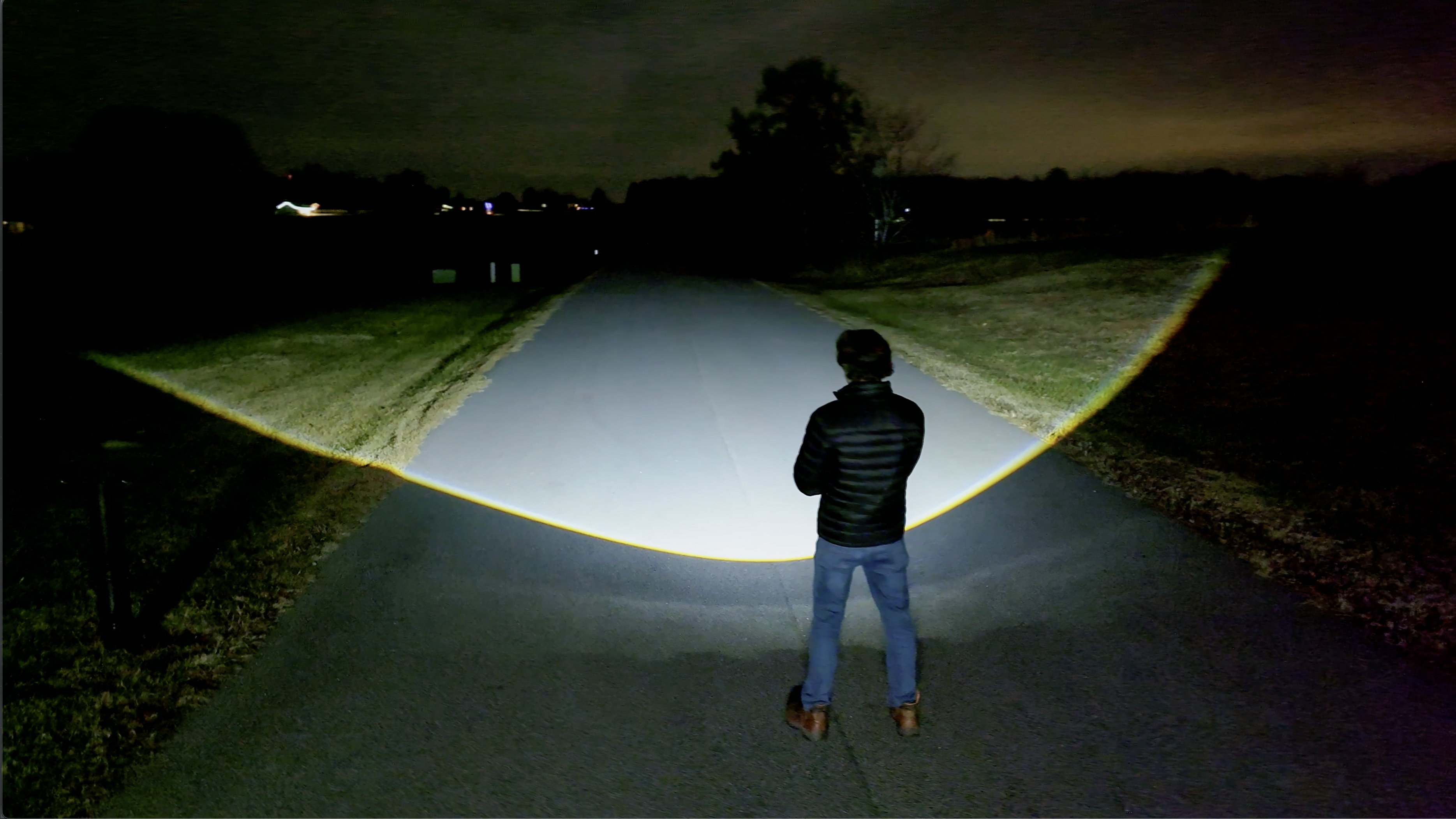
Look for a lumen rating of at least 300, though 500 or more gives you real margin. A good flashlight for car use should offer a long beam on high, enough to inspect under the hood, signal for help, or light up the roadside during a power outage, plus a lower mode to conserve power for longer tasks.
Durability & Weather Resistance
Whatever you choose, it should be impact resistant and water resistant. Roadside emergencies don't wait for good weather, and a flashlight that lives in your car needs to survive drops, splashes, rain, and temperature swings without missing a beat.
Hands-Free Grip
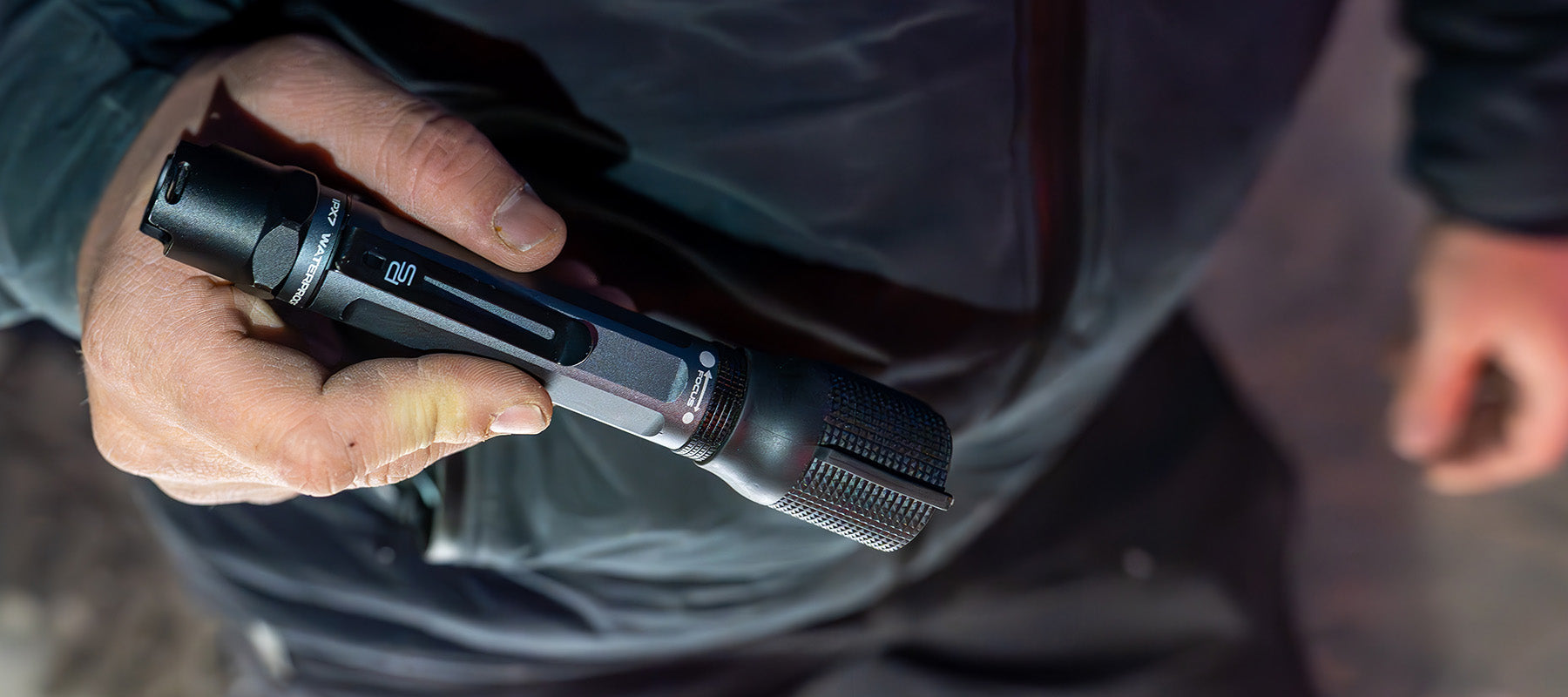
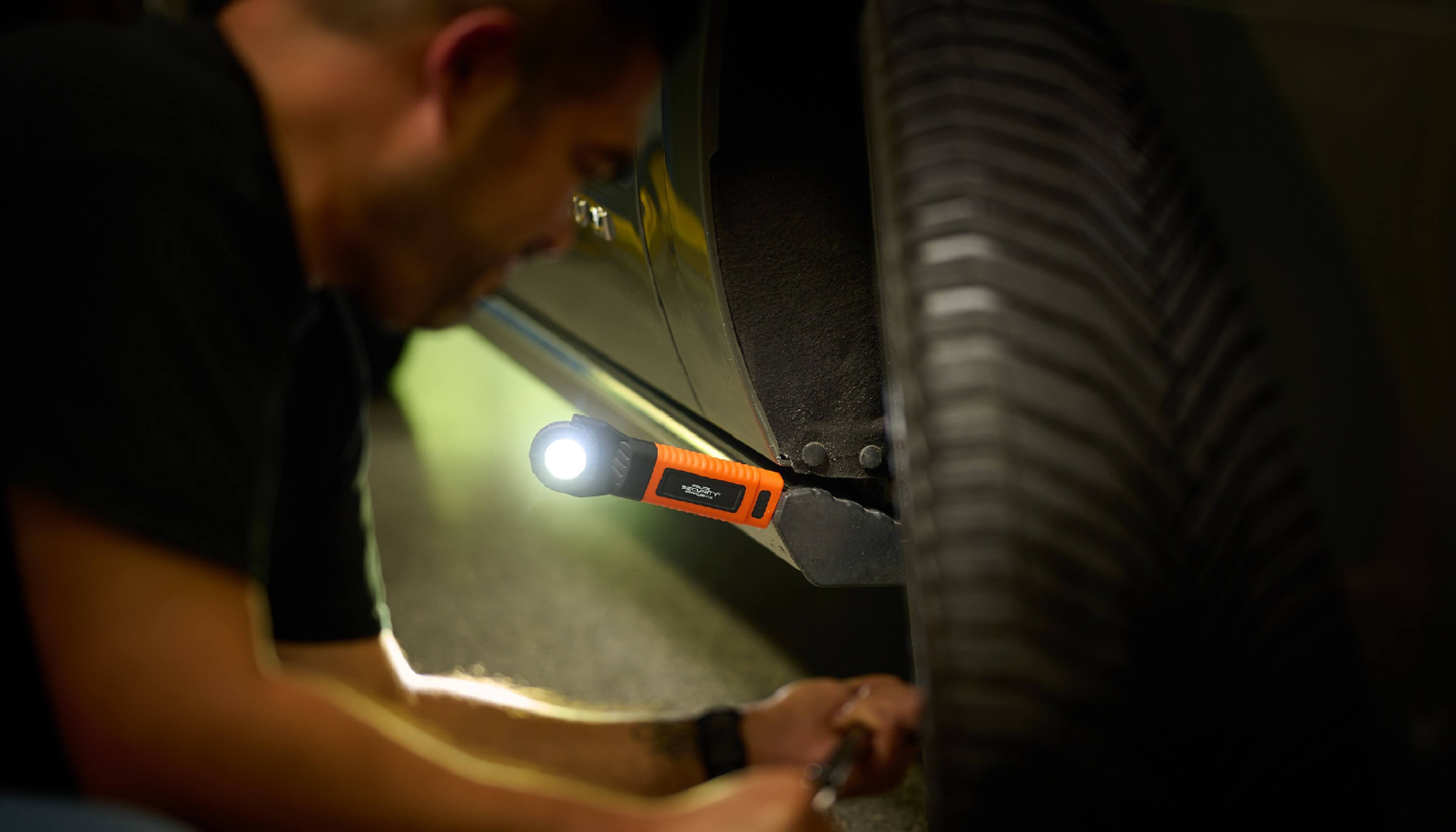
Changing a tire, checking fluid levels, or working under the hood usually means you need both hands free, not one hand holding a light. A few of our flashlights solve this with a rubberized bite guard built into the end of the light, so you can clamp it between your teeth and keep both hands working. It sounds simple, but it's one of the most useful features you can have in a roadside kit.
Rechargeable vs. Alkaline: Which Is Right for Your Car?
This is the question we get most, and it depends on how often you actually use the light.
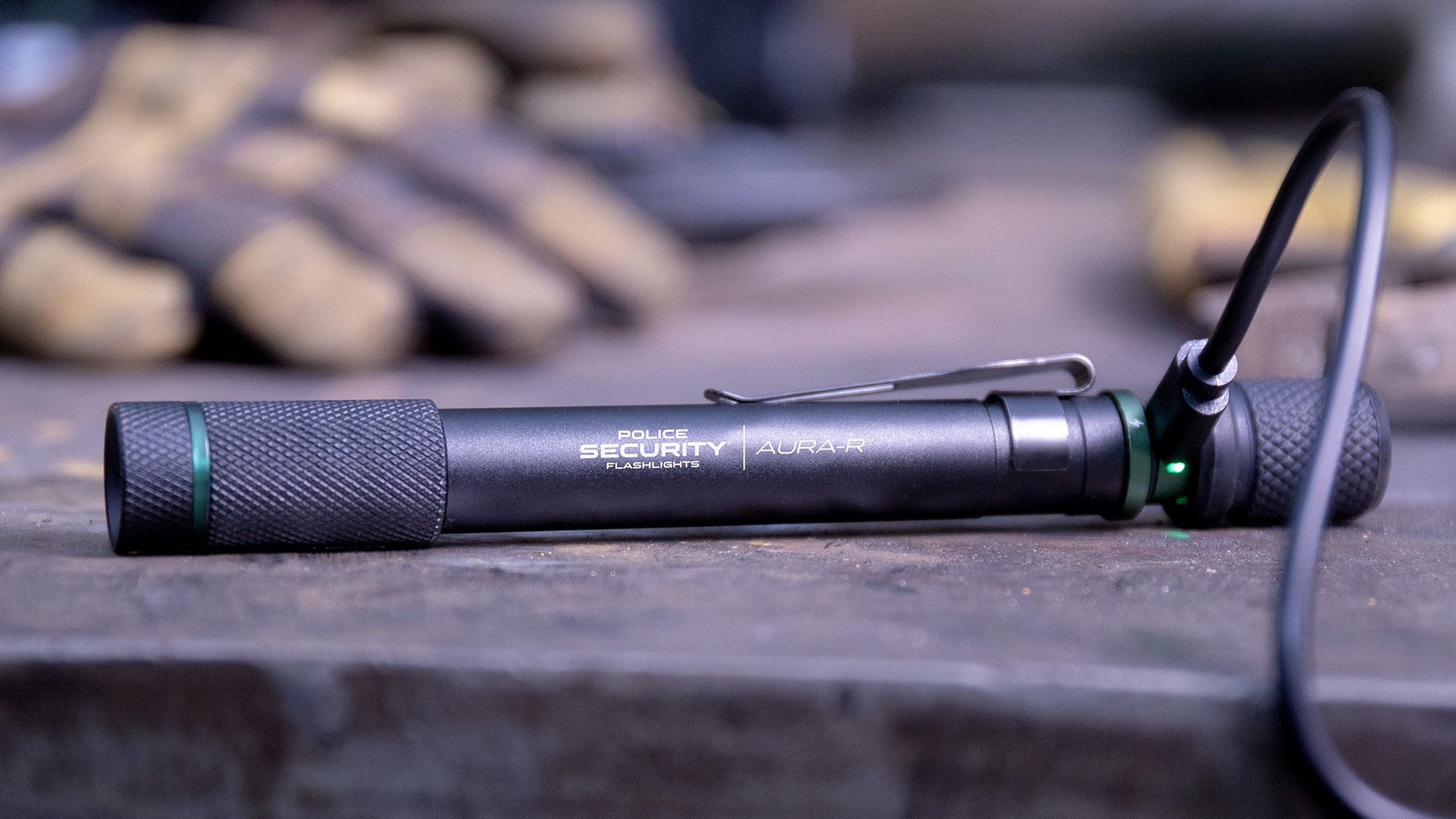
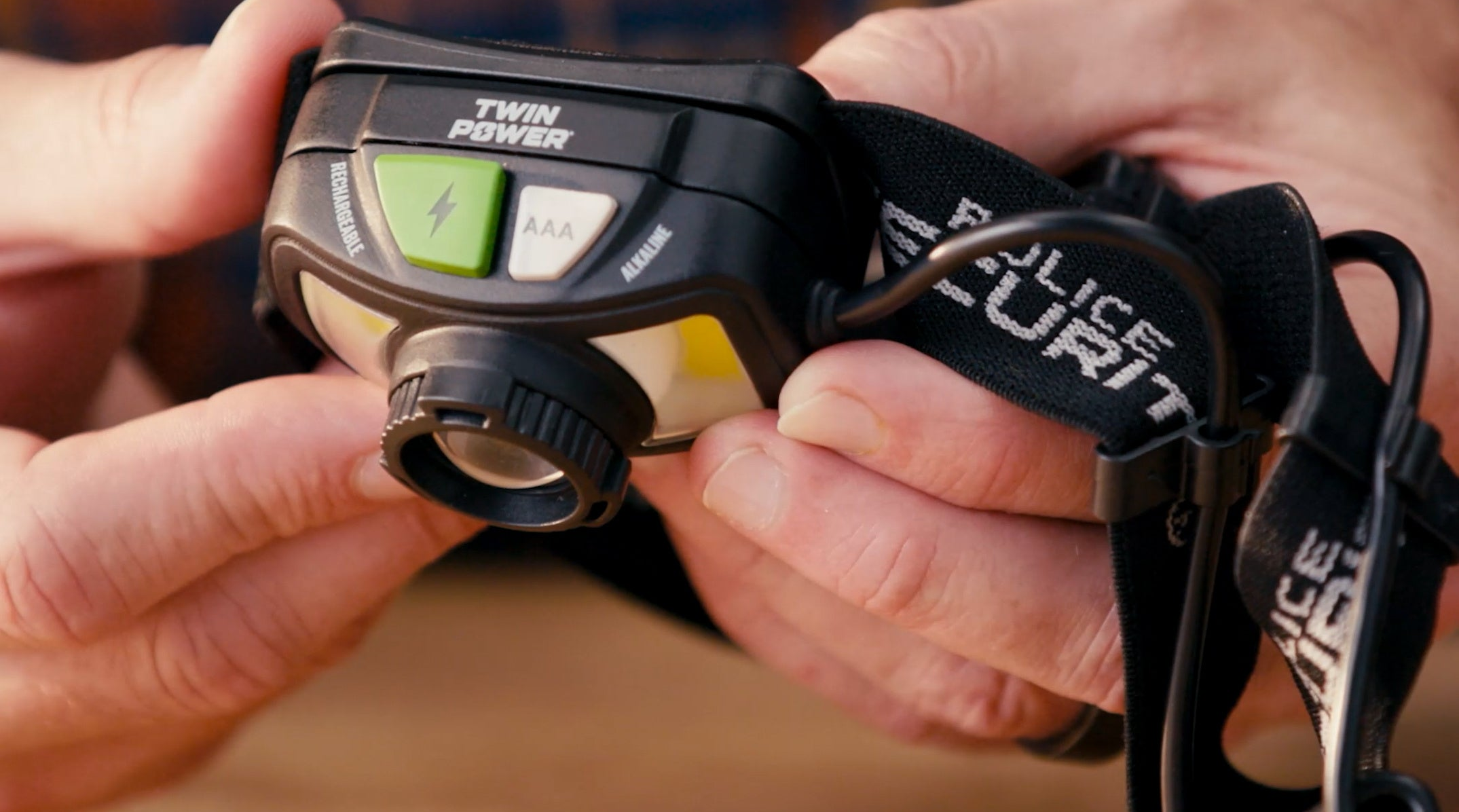
Rechargeable flashlights are a great fit if you'll use the light regularly, whether that's checking on the kids at night, walking the dog, or just being the person who always has a light handy. They charge over USB, so there's no ongoing cost of buying batteries, and most rechargeable models put out strong, consistent brightness. The tradeoff is that a rechargeable flashlight sitting untouched in a glovebox for months can slowly lose its charge, so it needs the occasional top-off to be ready when you need it.
Alkaline flashlights are the better call if this is a true "break glass in case of emergency" light, one that might sit in your car for months without being touched. Alkaline batteries hold their charge in storage far longer than a rechargeable cell does sitting idle, so you're more likely to have a working light when an emergency actually hits. The tradeoff is that alkaline batteries can corrode over time, especially in a car that goes through hot summers and cold winters, so it's worth checking on them a couple of times a year and swapping them out if you see any buildup. You could also store the batteries outside the light, so that any corrosion that happens doesn't damage the light.
There's no wrong answer here. If you'll use your car flashlight often, go rechargeable. If it's mainly for emergencies and you don't want to think about it, alkaline is the more forgiving choice, just don't forget to check the batteries.
For a deeper dive into charging tech, battery types, and how to get the most life out of a rechargeable light, check out our Rechargeable Flashlights buying guide.
Our Picks for the Best Car Flashlight
Best Rechargeable Car Flashlight: USB 550 Lumen Rechargeable Car Flashlight

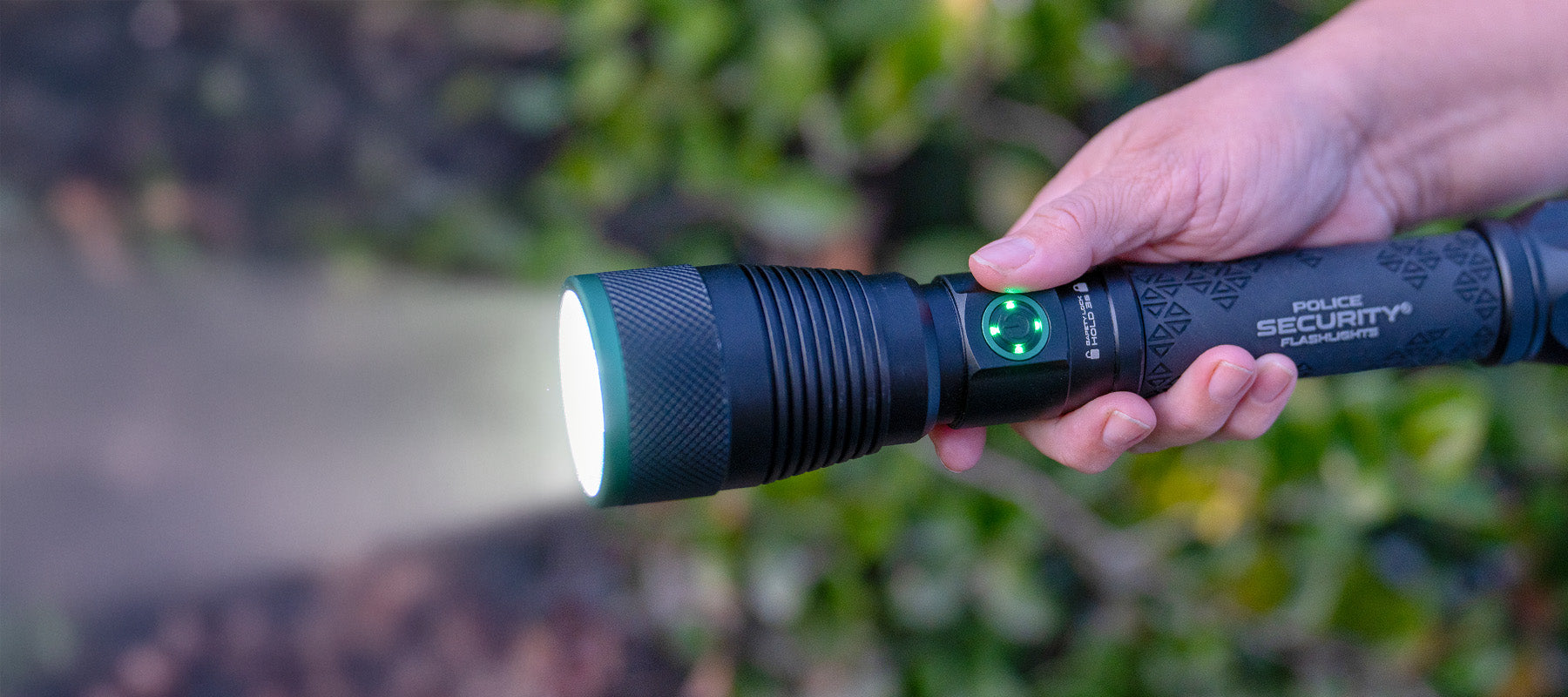
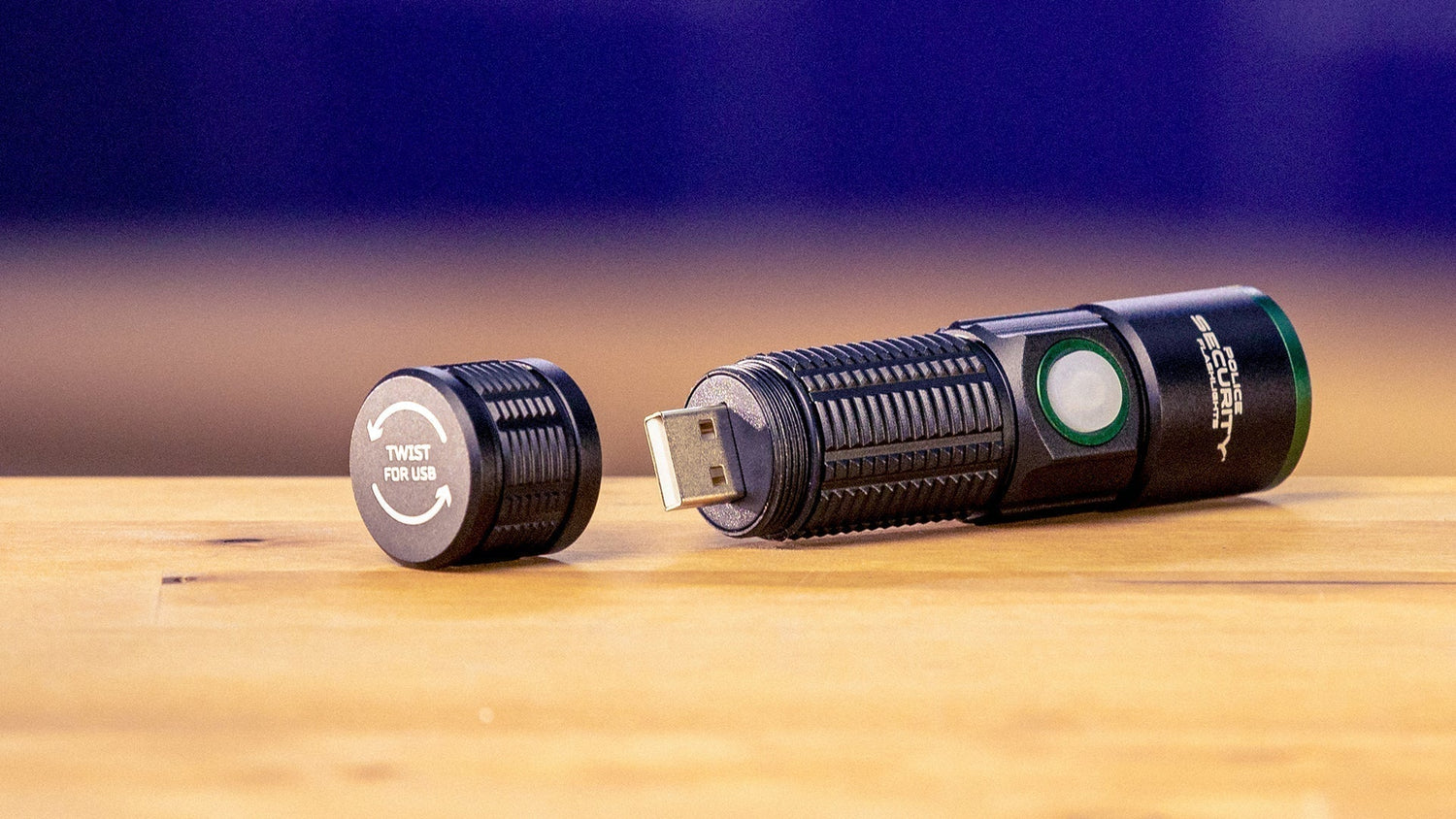
Our $19.99 USB 550 Lumen Rechargeable Car Flashlight is built for exactly this job. It puts out 550 lumens on high and 150 on low, with a beam distance of 100 meters on high and 60 meters on low. It runs on an included 14500 600mAh lithium-ion battery you recharge with any USB car charger, power bank, or wall outlet, so there's never a battery to buy. It's impact resistant to a 1-meter drop, water resistant for rain and splash exposure, and backed by a limited lifetime warranty. Small enough for a glovebox, strong enough for a real emergency.
Best Alkaline Car Flashlight: Zephyr 550 Lumen Alkaline Flashlight

If you want a car flashlight that can sit untouched for months and still work when you need it, the Zephyr 550 Lumen Alkaline Flashlight is our pick. It runs on 2 AA alkaline batteries and matches the rechargeable model almost lumen for lumen: 550 on high, 190 on low, with a beam distance of 170 meters and a runtime of up to 8 hours on low. It has the same twist focus, silent switch, and IPX4 water resistance you'd expect from a glovebox flashlight, without needing a charge.
Want even more throw for scanning a dark roadside? The Long Throw 3AAA Alkaline Flashlight pushes a beam out to 410 meters on high, roughly a quarter mile, making it a strong option if visibility at a distance matters most to you.
Keep Both Hands Free: Headlamps and Bite-Guard Flashlights
A handheld flashlight isn't always the right tool. When you're actually working under the hood, changing a tire, or digging through a trunk in the dark, a hands-free option can make the job faster and a lot less frustrating.
Headlamps Are Worth the Glovebox Space

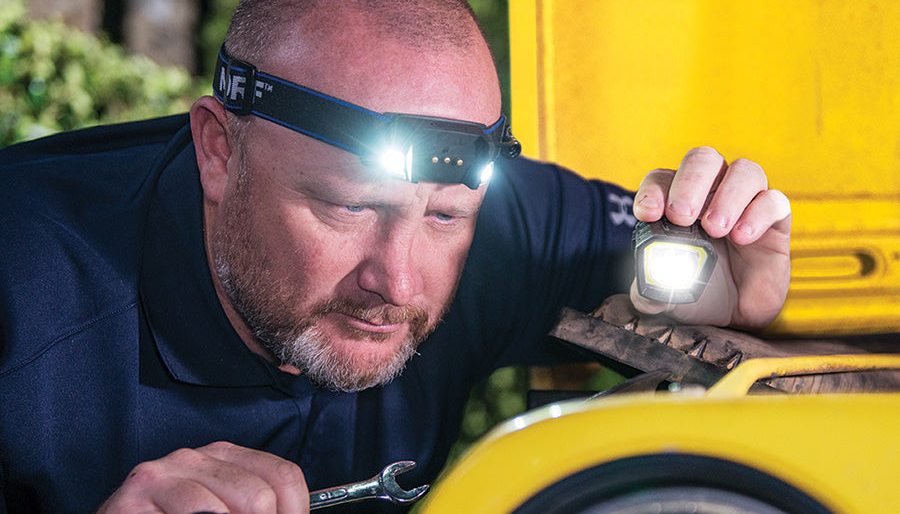
A headlamp goes wherever you look, which means you get light exactly where you need it while both hands stay free. The Ryder 350 Headlamp is a compact, alkaline-powered option (3 AAA batteries included) that puts out 350 lumens on high with a 150-meter beam and an adjustable headband for a secure fit. It even includes a red night vision mode, handy for checking a map or your phone without wrecking your night vision. At $14.99, it's an easy add to any car emergency kit.
Bite-Guard Flashlights: Hands-Free Without the Headband

If a headband isn't your thing, a bite-guard flashlight is the other hands-free option worth knowing about. Our Aura-RS Rechargeable Hands-Free Penlight has a rubberized bite zone built into the end of the light, so you clamp it between your teeth and keep both hands working, whether that's holding a wrench, a jack, or a jumper cable. It puts out 260 lumens on high with an 80-meter beam, recharges over USB-C, and clips easily into a glovebox or tool bag thanks to its slim aluminum penlight profile.
If you want to see more great options for car flashlights, visit our car emergency flashlights collection.
Best Places to Store a Flashlight in Your Car
- Center console or door pocket: Always within reach.
- Under the seat or in a trunk kit: Store alongside jumper cables and other roadside gear, and this is a great spot for a headlamp or bite-guard flashlight too.
- The glove compartment. Easy to get to and a popular spot to store a flashlight.
Whatever type you choose, a good car emergency flashlight should be small enough for daily use and always within arm's reach in a roadside kit.
Maintenance Tips for Longer Battery Life
- If it's rechargeable, top off the charge before long trips or bad weather.
- If it's alkaline, check the batteries a couple of times a year for corrosion and swap them out if you see any.
- Clean the lens and any USB port or battery contacts occasionally.
- Store it away from extreme heat or cold when you can.
A little maintenance ensures you always have a bright light when you need it most, whether that light plugs in or takes batteries.
Frequently Asked Questions
What's the best car flashlight for emergencies?
Look for at least 300 to 500 lumens, a durable, water-resistant body, and a flash or strobe mode for signaling. Beyond that, it comes down to how you'll use it: our rechargeable Car Flashlight and alkaline Zephyr are both built specifically for roadside emergencies, so check out our picks above to see which fits how you drive.
Should I get a rechargeable or alkaline car flashlight?
If you'll use it often, go rechargeable, you'll get the convenience of USB charging without buying batteries. If it's strictly for emergencies and might sit for months, alkaline holds its charge in storage longer and is more likely to work the moment you need it, though it's worth checking the batteries a couple of times a year since alkaline can corrode over time, especially through a car's hot and cold swings.
Can alkaline batteries corrode in my flashlight?
Yes, over time alkaline batteries can leak and corrode, especially in a car that goes through big temperature swings. Check them a couple of times a year and replace them if you notice any buildup on the contacts.
Can I leave a flashlight in my car?
Yes, just avoid storing it somewhere that gets very hot, like the dashboard or where the sun is hitting it. A glove compartment, center console, door pocket, or trunk kit is a better spot.
Does a car flashlight need a magnetic base?
It's not a must-have, but it can be genuinely useful if you want to mount your light to the hood or a metal surface while you work hands-free. It's not something our dedicated car flashlights include, but our MORF removable headlamps detach into a magnetic flashlight, so you get that same hands-free mounting option along with the headlamp.
Where can I buy a durable car flashlight?
Right here. You can shop our full lineup of rechargeable and alkaline car flashlights online at policesecurity.com, and you'll also find Police Security flashlights on the shelf at hardware and retail stores nationwide.
Is a headlamp or bite-guard flashlight better for hands-free car repairs?
Both solve the same problem in different ways. A headlamp puts light exactly where you look and works well for longer jobs, while a bite-guard flashlight like the Cavalier is quick to grab and doesn't require a headband. Keeping one of each in your car emergency kit covers you either way.